Think Like an Octopus
Sep. 11th, 2019 11:08 pm![[personal profile]](https://www.dreamwidth.org/img/silk/identity/user.png) mtvessel
mtvesselJan 2019
Other Minds - Peter Godfrey-Smith – William Collins, 2016
* * * *
Well, I'm not eating octopus again. This is a book by a philosopher of science who is interested in how sentience and a sense of the subjective self could have evolved. What makes cephalopods uniquely interesting in this context is that like us, they are an evolutionary experiment in big brains and complex behaviours, but based on an entirely different body plan. What are the commonalities between octopus intelligence and ours? What are the differences? That is what this fascinating book is all about.
In case that sounds a little dry and intellectual, I should make clear that it is anything but. Much of the text consists of descriptions of octopus behaviour in the wild, often observed by the author himself. One curious feature of studies into octopus intelligence is that laboratory experiments, which show that they can learn mazes and suchlike but do so fairly slowly, are at odds with much observed behaviour, which shows great adaptability and possibly a twisted sense of humour. An early experiment in octopus training came up against Charles, an individual who refused to play by the rules. Instead of gently operating a lever to receive sardine treats, Charles would wrench it off with great force, terminating the experiment. He also had a tendency to squirt jets of water out of his tank, aimed specifically at the experimenter. This is by no means an isolated phenomenon. One hapless researcher in New Zealand was regularly squirted with half a gallon of water by an octopus who had taken a dislike to them. Octopuses, it appears, can distinguish between different humans, even if they are wearing identical uniforms, and even beyond panes of glass. They also show remarkable adaptive behaviour in captivity. Octopuses in New Zealand and Germany learned to squirt water at lights when no one was looking, short circuiting them (octopuses don't like bright light). They have also been known to block outflows with their arms, flooding the lab. Octopuses also appear to be able to tell when a human watching them, and will time attempted escapes when their back is turned. The most likely explanation for their so-so performance in conventional measurements of intelligence is that they get bored by repetitive tasks.
Another possible reason is the way in which their cognition is embodied. By that I mean that the interactions between an octopus' brain and its body must be radically different from ours. Most of an octopus' neurones are in its tentacles rather than its head, and experiments suggest that the relationship between the two is much more collegiate than in chordate animals like ourselves. The brain can guide tentacles to investigate something at which the eyes are looking, or coordinate a fight or flight response, but individual tentacles can also explore or respond independently of the rest of the individual. More fundamentally, an octopus' body does not have the fixed relationships between its different parts that ours has, and this must have influenced the evolution of its brain. One could even go so far as to say that the extraordinary thing is not how different octopus behaviours are, but how so many are recognisable, for example distinction between long term and short term memory, playing with objects that aren't food, recognising individuals, and re-identifying objects despite changes in appearance.
Talking of changing appearance, cephalopods are famous for their ability to alter their colouring, thanks to a complex four-layer skin that includes cells that act like reflectors and diffraction gratings as well as the chromatophores containing dye-filled vacuoles that are distended or compressed by muscles. The obvious use of such a system is as camouflage to protect against predators or to sneak up on prey, and there are plenty of nature documentary that show some spectacular examples of this. But observations of cuttlefish in particular show that there must be more than that going on. Godfrey-Smith describes an individual he calls Matisse, who would produce intense yellow flashes like starbursts while hovering in an apparently unconcerned way. This was not a startle response - there was no accompanying flailing of tentacles or such like. They just appeared to be a part of Matisse's personality.
What's really weird about this is that most cephalopods are colour-blind. They only have a single type of photoreceptor in their eyes, which means that they have no way of distinguishing between shades based on differential responses of different groups of cells. So how can they be so adept at camouflage when they can't even see the colour of the surroundings that they are blending in with? The short answer is that no-one knows for certain, but there is an intriguing possible explanation. It has been shown that in cephalopods, cells with photoreceptors are not found just in the eye - they exist in the skin as well, and can trigger responses independently of the rest of the animal. And if a chromatophore were to sit on top of a photoreceptor cell, it would act as a coloured lens, allowing different wavelengths to be perceived differently. Given that chromatophores come in three basic colours (red, yellow and black/brown in a giant cuttlefish), this could correspond to the three types of receptors we have in our eyes. If this is the explanation, then perhaps the "idling" colour changes like Matisse's are simply the animal scanning its environment. Or they could also be an unintended consequence of its neural function, like a video screen reflecting its brain activity, like how an EEG visualises ours.
In humans and other primates, one of the drivers for development of big brains is thought to be our social nature. This doesn't appear to be the case for octopuses. They are mostly solitary creatures with distressingly short lives - typically one or two years. Octopuses are semelparous; that is, they lay one set of eggs and then die. This is odd. Creation of a big brain is a huge developmental investment - why waste it on an animal that lives for such a short time? The interesting answer is that the octopus is the victim of two effects that tend to shorten lifespan. The Medawar effect is the accumulation of deleterious mutations after an animal has reached an age at which it has successfully reproduced. The Williams effect is a question about the most economically successful genetic strategy - if a mutation has a positive effect early in life but a deleterious one later on, will it be selected for? It all depends on the conditions. Octopuses are unusual in that they evolved from a shell-covered ancestor (Camerocerus is a spectacular example) and presumably lost their protection in order to become more effective hunters. So they are in the unusual position of being both a predator that has to go out to hunt, and a soft-bodied creature that will make a good meal for a passing shark or moray eel. Given the high likelihood of predation, surviving to a second breeding season is highly unlikely, so "live fast, die young" mutations will accumulate.
This is not a perfect book - there is a chapter on language and efference copies that I didn't really understand and which seemed to have very little relation to the rest of it. It would also have been nice for it to have ended with some conclusions about what octopoid minds can tell us about the general phenomenon of consciousness, rather than with an anodyne plea for humans to take better care of the oceans, important though that is. The message that I took from this book is that some scientific definitions of what constitutes intelligence, and maybe consciousness, are too narrow. I have had the good fortune to see orang utans in a semi-wild environment, and I got the same sense of curious, adaptive intelligence that I got from the descriptions of octopus behaviour in this book. Science doesn't have to prove that other animals have minds - when you see them, or read about what they do, you know.
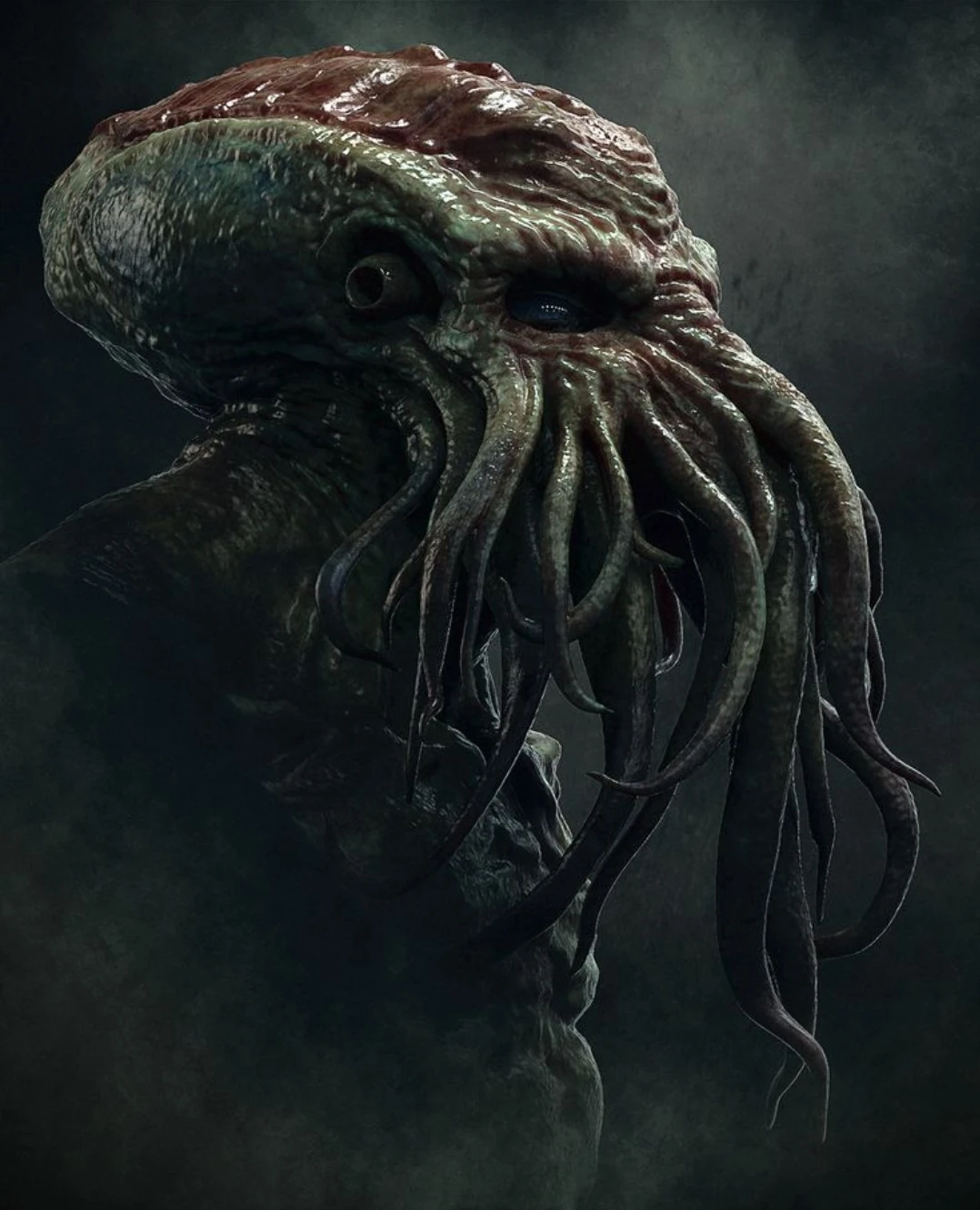
Many of our conceptualisations of aliens tend to the octopoid, but when you understand their history and think about the effects of their body shape and evolutionary history on their neural development, they really aren't. Their intelligence is surprisingly similar to ours. And that means that octopuses, like orang utans, deserve our respect, and some rights. We certainly shouldn't be eating them.